
CSI combines seasoned professional experience with the energy of young engineers to deliver exceptional MEP engineering services. Focused on innovation, client satisfaction, and operational excellence, CSI develops tailored solutions that exceed expectations and build lasting partnerships.

Without structured integration, these systems often operate in isolation, creating interface gaps, delayed testing, performance issues, and operational risk. CSI Engineering acts as an independent integration lead—coordinating interfaces, validating interoperability, and supporting performance assurance as a natural extension of commissioning.
Why Clients Choose Us:
Commissioning verifies that individual systems are installed, started up, tested, and operating correctly. MSI verifies that those systems interact correctly, exchange data appropriately, and support common control strategies across system boundaries. CSI Engineering delivers MSI as a natural extension of commissioning, helping the building perform as a complete system rather than a collection of isolated packages.

At the start of the project, CSI Engineering reviews project requirements, design information, controls narratives, sequences of operation, and package boundaries to identify where systems must exchange signals, share logic, or respond to common events. The goal is to convert integration intent into a clear strategy before procurement, installation, and testing begin.
We review drawings, specifications, owner requirements where available, system architecture, controls interfaces, cause-and-effect logic, and authority requirements. We help define interface principles, integration scopes, responsibility boundaries, risk items, and acceptance criteria. Early workshops are used to align consultants, contractors, controls specialists, vendors, and operators on how the completed building is expected to function as one coordinated environment.
Early MSI planning prevents late-stage rework, reduces interface ambiguity, protects procurement decisions, and makes downstream testing far more efficient. It gives the project a shared technical roadmap instead of leaving integration issues to be resolved under schedule pressure.

MSI succeeds only when each interface has a defined owner, a clear scope, and an agreed method of verification. CSI Engineering manages this coordination across mechanical, electrical, controls, fire, security, ICT, public health, and specialist systems.
We identify interface points and dependencies, develop interface matrices and action logs, facilitate coordination meetings, and keep responsibilities visible across all parties. Particular attention is given to cross-discipline items such as power and controls dependencies, alarm routing, network connectivity, shared sensors, builder's work interfaces, third-party packages, and operational sequences that span multiple systems.
Structured interface coordination reduces scope gaps and duplicated effort, improves accountability, and helps prevent critical tasks from being lost between package boundaries. It also gives the client and project team clearer visibility of integration status throughout delivery.
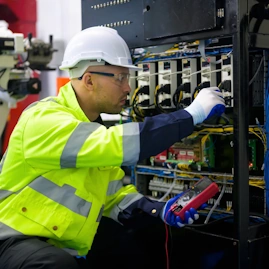
Once site works start, MSI must move beyond drawings and into verification of what is actually being installed. CSI Engineering provides progressive oversight so agreed interfaces are implemented correctly before formal integrated testing begins.
We monitor installation progress against the integration strategy, verify readiness of key interfaces, support progressive inspections, coordinate issue resolution, and review field conditions that may affect system interoperability. Our team works closely with contractors and commissioning parties to keep interface issues visible, prioritized, and aligned with the project schedule.
Progressive oversight helps teams identify problems earlier, resolve conflicts faster, and avoid discovering coordination gaps only at the point of energization, witness testing, or handover.

MSI reaches its critical point when systems must prove they work together—not just individually. CSI Engineering develops and coordinates integrated testing strategies that demonstrate real interactions across system boundaries.
We define integrated test scripts, prerequisites, witness plans, and pass/fail criteria aligned with project requirements. Testing may include cause-and-effect responses, alarm routing, standby power transfer, BMS and third-party interactions, life safety sequences, environmental control responses, security interfaces, and operational scenarios that require multiple systems to act together. Results are documented, deficiencies are tracked, and retesting is coordinated until closure.
Integrated testing reduces operational surprises, proves that control strategies function as intended, and provides stakeholders with evidence that the building can support safe, reliable, and repeatable operation under realistic conditions.
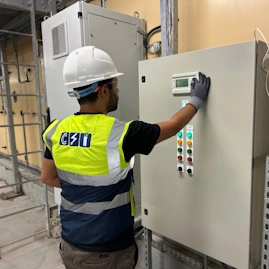
MSI is not complete when testing ends; it is complete when the building is ready to be operated as intended. CSI Engineering links integration validation to handover readiness, operator understanding, and performance assurance.
We support readiness reviews, confirm closure of interface issues, validate records and test evidence, coordinate with commissioning and operations teams, and verify that integrated systems align with project requirements at turnover. Where needed, we support phased handover, final demonstrations, and structured closeout evidence for client acceptance.
This results in smoother handover, stronger confidence for operators, fewer post-handover issues, and a building that is easier to operate from day one.
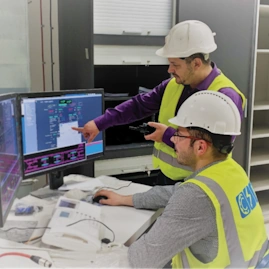
On complex projects, time is lost when interface issues, approvals, test records, and responsibilities are spread across emails and disconnected spreadsheets. CSI Engineering supports MSI with digitized workflows that improve visibility, control, and traceability.
We organize interface registers, issue tracking, test scripts, readiness checklists, evidence capture, and status reporting within a controlled digital process. Teams gain live visibility of outstanding issues, ownership, due dates, evidence closure, and test status. This is especially valuable where shutdown windows, energization milestones, and staged handovers are time-critical.
Digitized MSI delivery accelerates decision-making, improves reporting quality, strengthens audit trails, and helps project teams close issues faster with less ambiguity. It turns integration from a reactive exercise into a controlled, visible workflow.
CSI Engineering is technology-agnostic. We do not design proprietary platforms, replace specialist vendors, or take software development responsibility. Our role is to ensure interfaces are defined clearly, systems are coordinated correctly, and integrated performance is validated with reliable evidence.
Need independent coordination and validation of building systems to deliver a fully integrated, high-performing facility? CSI Engineering's MSI services provide interface management, integrated testing, performance assurance, and digitized delivery control from early strategy through operational handover.
Get In Touch
With a global footprint spanning over 20 countries, we apply international best practices while adapting to the specific needs of each client and location.
CSI Engineering - Copyright 2026. All rights reserved.
