Quality Assurance and Quality Control

Our delivery model connects field inspections, testing results, corrective actions, and handover evidence into one controlled workflow. Where civil inspection and site verification are required, scope can be delivered in coordination with CITEX under the CSI group's common quality framework.

Key Benefits

  • Clear acceptance criteria and disciplined inspection control
  • Reduced rework through early defect identification and structured closure
  • Stronger coordination between civil, MEP, testing, and turnover activities
  • Digitized records that improve transparency, traceability, and audit readiness
  • Faster closeout with better reporting, evidence capture, and handover control

Value Proposition Summary

Why Clients Choose Us:

  • Independent technical assurance focused on measurable evidence, not assumptions
  • Quality control aligned with testing, commissioning, and handover readiness
  • Field-proven reporting structure for observations, NCRs, corrective actions, and closure evidence
  • Civil and MEP quality control can be delivered under one reporting logic across the CSI group
  • Digital execution through controlled workflows that improve visibility, control, and time management

Typical Deliverables

  • Daily inspection reports, photo logs, punch lists, and observation records
  • Nonconformance reports with closure evidence and status tracking
  • Test reports, certificates, and calibration records where applicable
  • Readiness checklists by system, area, package, or milestone
  • Final quality dossier to support approvals, turnover, and closeout

Standards & Project References Commonly Used

  • Project specifications, approved submittals, ITPs, and authority requirements
  • IBC requirements for special inspections where applicable
  • ASTM, ACI, and AASHTO standards for materials and workmanship acceptance
  • AWS standards for welding inspection where applicable
  • NFPA and local authority requirements for fire and life safety systems
  • ASHRAE commissioning process practices and project commissioning specifications
  • NETA and NEBB procedural practices where required by project scope

Delivery & QA/QC Management

Delivery and QA/QC Management

CSI establishes the quality framework that keeps project packages inspection-ready from procurement through turnover. This includes inspection and test plans, submittal and design review support, field inspection planning, material testing coordination, NCR management, and handover readiness checks.

CSI Approach

We define acceptance criteria, hold points, witness points, and reporting paths early. Our teams review approved documents, coordinate inspections by area and system, track open items to closure, and verify that corrective actions are supported by evidence before downstream activities proceed.

Value to the Project

This service reduces ambiguity, improves coordination between project stakeholders, and creates a more predictable path from installation to closeout.

Related FAQs

An ITP is a structured document that defines what needs to be inspected or tested, at what stage, by whom, and to what acceptance criteria. It provides a traceable record of quality verification activities and ensures hold and witness points are formally observed before work proceeds.

A Nonconformance Report (NCR) is raised when work, materials, or documentation fail to meet acceptance criteria. The NCR process tracks the issue from identification through corrective action to verified closure, ensuring no nonconformance is left unresolved before the next phase of work.

The quality framework should be established during the pre-construction or procurement phase, before field activities begin. Early setup of ITPs, reporting paths, and acceptance criteria prevents gaps once installation work starts.

Survey & Documentation

Survey and Documentation

CSI supports layout verification, as-built checks, progress validation, photo documentation, issue tracking, NCR closure follow-up, and structured weekly or milestone reporting. Where required, scope can extend to hydro-survey and underwater inspection support.

CSI Approach

We capture field evidence in a controlled and traceable format that links observations, photos, status, and closeout records to the relevant package, area, or system.

Value to the Project

Reliable site records reduce disputes, strengthen stakeholder confidence, and make approvals, audits, and turnover reviews more efficient.

Related FAQs

As-built verification confirms that installed work matches approved drawings and specifications. It involves field measurements, dimensional checks, and photographic records that document the actual constructed condition for future reference, handover, and maintenance.

Traceable documentation with time-stamped photos, inspection records, and status logs creates a clear evidence trail. When disputes arise about installation quality or scope, this record eliminates ambiguity and supports fair resolution for all parties.

Milestone reporting summarises quality status at defined project checkpoints such as structural completion, system installation, or pre-handover. Reports typically cover inspection completion rates, open NCRs, punch list status, outstanding submittals, and overall readiness assessment.

MEP QA/QC & Commissioning

MEP QA/QC and Commissioning

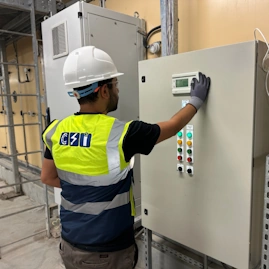
CSI verifies HVAC, plumbing, drainage, electrical, ELV, and associated interfaces against approved drawings, specifications, local codes, and authority requirements. Our scope can extend into testing and commissioning, including pre-functional checks, start-up witnessing, functional performance testing, integrated systems testing, and turnover validation.

CSI Approach

We treat quality control and commissioning as one continuous process—from design intent and constructability, through installation verification, to functional performance and handover.

Value to the Project

Clients gain a single technical assurance process that improves installation quality, reduces interface failures, and supports reliable system turnover.

Related FAQs

MEP quality control focuses on verifying that systems are installed correctly and in compliance with approved drawings, specifications, and codes. Commissioning extends this to verify that installed systems perform as intended under operating conditions. CSI treats these as one integrated process to avoid gaps at the handover boundary.

Pre-functional inspection verifies that equipment is correctly installed, connected, and ready for start-up. It covers physical installation checks, submittal compliance, labelling, access, pipe support, duct integrity, electrical terminations, and safety device installation before energisation or system start-up.

Integrated systems testing (IST) verifies that multiple systems work together correctly under realistic operating scenarios, including emergency modes, sequences, and interlocks. It identifies interface failures that individual system tests may miss, and provides confidence that the facility will perform as a whole from day one.

ELV systems covered typically include fire detection and alarm, CCTV, access control, PA/VA, structured cabling, BMS/IBMS, nurse call, and data networks. The scope is defined by project specifications and authority requirements.

Civil Quality Control & Technical Assurance

Civil Quality Control and Technical Assurance

Where civil quality control is required, CSI can extend delivery through CITEX to provide site assessment, earthworks inspection, utilities inspection, trenching and backfilling review, compaction verification, concrete works inspection, roads and paving checks, structural steel and welding inspection where applicable, trenchless package oversight, land survey support, and structured reporting.

CSI Approach

Civil QA/QC is delivered under the same governance, reporting logic, and digital evidence structure used across CSI group projects.

Value to the Project

Clients gain one technical assurance framework across site works, infrastructure, and building systems.
Related FAQs

CITEX is a specialist civil and infrastructure services company within the CSI group. Civil quality control scope is delivered through CITEX using the same reporting logic, governance framework, and digital evidence structure applied across CSI group projects, giving clients a unified quality assurance approach across building and civil works.

Compaction is typically verified using nuclear density gauges, dynamic cone penetrometers (DCP), or sand replacement methods, depending on project specifications and applicable standards such as ASTM D1556, ASTM D6938, or AASHTO T 191. Results are checked against specified compaction percentages relative to maximum dry density.

Structural steel inspection covers material certification review, dimensional checks, fit-up and alignment verification, and coating inspection. Welding inspection includes welder qualification verification, visual weld inspection, and non-destructive testing (NDT) such as ultrasonic testing (UT) or magnetic particle testing (MT) in accordance with AWS D1.1 or project specifications.

Design Assurance & Existing Buildings

Design Assurance and Existing Buildings

CSI supports design compliance reviews, constructability and commissionability reviews, BIM coordination and clash resolution, design change assessments, recommissioning, performance audits, handover recovery, energy optimization, and system tuning.

CSI Approach

We use early-stage technical review to catch issues before they reach site, and we use post-handover or existing-building assessments to recover performance when assets fall short of operational requirements or documentation quality.

Value to the Project

This service helps prevent expensive downstream rework, improves maintainability and operability, and restores confidence in existing assets.

Related FAQs

A constructability review assesses whether a design can be practically built within the project's constraints. A commissionability review assesses whether systems can be tested, adjusted, and handed over as designed — including access for instruments, control sequences, and isolation provisions. Both are best conducted during the design phase.

A performance audit reviews how building systems are currently operating compared to design intent and owner requirements. It includes system data review, site inspection, testing, and documentation assessment to identify gaps in performance, maintenance records, and operational compliance.

Handover recovery is needed when a building has been occupied without complete commissioning, with incomplete documentation, or where systems were never fully verified. Recovery scope typically covers documentation gap analysis, outstanding functional testing, punch list resolution, and preparation of a final quality dossier.

Quality Control Powered by Digital Execution

Quality Control Powered by Digital Execution

CSI's quality control services can be delivered through digitized workflows supported by Videntium, provided by Thronis. Inspections, punch lists, NCRs, test results, commissioning records, handover documents, and asset information can be managed in one controlled environment with role-based access and traceable activity logs.

Key Capabilities
  • Common data environment for approved documents and controlled distribution
  • Quality control workflows for inspections, punch lists, and NCR closure
  • Testing and commissioning checklists, witness records, and test results
  • Handover and asset information linked to equipment, locations, and documents
  • Cloud or on-premises hosting based on client requirements
  • Security controls including access management, encryption, and auditable activity logs
Value to the Project

This gives project teams full visibility, stronger control, faster issue closure, and better time management on complex or fast-track projects.

Related FAQs

Videntium is a digital project execution platform provided by Thronis that manages the full quality control workflow — from inspections and punch lists through NCR tracking, test records, and handover packages — in one controlled environment. It replaces disconnected spreadsheets and paper records with a single traceable digital process.

Yes. Videntium supports both cloud and on-premises hosting configurations to meet client data residency, security, and compliance requirements. Hosting arrangements are agreed during project setup based on owner and authority requirements.

A common data environment ensures all project team members are working from the same current documents and records. It eliminates version confusion, reduces communication gaps, and provides a single source of truth for inspection status, open issues, and closure evidence — speeding up approvals and reducing rework.

Videntium uses role-based access control so each user sees and can act only on what is relevant to their scope. All activity is logged with timestamps and user identifiers, creating an auditable trail. Encryption is applied to data at rest and in transit to protect sensitive project information.

Ready to Strengthen Quality on Your Project?

Need independent quality control support for your project? CSI Engineering provides MEP QA/QC, testing and commissioning, design assurance, and handover readiness for complex buildings and infrastructure. Where civil inspection and site verification are required, scopes can be delivered through CITEX under the same reporting and digital evidence framework.

Contact Us